Exeter
University
Campus
A major influence on the design and layout of the University campus was E Vincent Harris and Sydney Kiffin Greenslade. Greenslade was an Exeter based architect Harris was based in Plymouth. Both had won awards for public building throughout the country.
If you are planning a visit to the university campus allow plenty of time because as well excellent architecture some of which is listed here there are beautiful grounds an excellent sculpture trail (https://www.artsandcultureexeter.co.uk/trail/sculpture-walk)and the Bill Douglas Cinema Museum. There are plenty of eateries in various student buildings


Mardon Hall (1933) E Vincent Harris
Mardon Hall was the first purpose-built hall of residence at the University of Exeter, designed in a country house style. Initially accommodating only male students, it became co-ed in 1986 and has a rich history, including serving as a rest centre for American troops during World War II.Conservative Neo Georgian with stone urns on the parapets and Exeter brick elevations

Washington Singer Laboratories (1931) E Vincent Harris
The building was completed in 1931 and is named after a benefactor from the Singer sewing machine family, playing a significant role in the university's scientific research and education.
Washington Singer Laboratories and Roborough Reading Room.are more interesting. Harris takes motifs like the bay window of Lutyens Deanery Garden. The facades are kept flat and shard edged, modulation being introduced through added porches or a huge bay window as seen in the Roborough building.these give the building a massive scale similar to Lutyens Castle Drogo.The interiors are vey plain

Roborough Reading Room, (1939)E Vincent Harris.
Named after Lord Roborough, who served as President of the University College from 1936 to 1938. The library has been a significant space for students, housing around 130,000 volumes and providing study areas for many years.

Hatherly Laboratories, (1953) E Vincent Harris are associated with the university's focus on scientific research. The laboratories have undergone various developments since their inception, contributing to the university's reputation in the sciences.

Mary Harris Memorial Chapel (1958)E Vincent Harris Grade II Listed
Again the influence of Lutyens is clear especially the Old West Surrey houses. But in the interior he displays his mastery of light and space. The building has a wonderful etherial abstract ceiling by Tom Monnington.
https://historicengland.org.uk/listing/the-list/list-entry/1266776?section=official-list-entry
The Forum (2012) WilkinsonEyre
The Forum as a new centrepiece for the University of Exeter's famously hilly Streatham Campus. Working with the natural features of the site, the scheme creates a green corridor to connect the Forum with the wider landscape. All the buildings and spaces in the Forum are related closely to the campus topography, establishing an architectural language which is less about placing objects in the landscape and more about an organic response to it.
https://wilkinsoneyre.com/projects/university-of-exeter-forum-project
https://www.architectsjournal.co.uk/specification/the-forum-university-of-exeter-streatham-campus

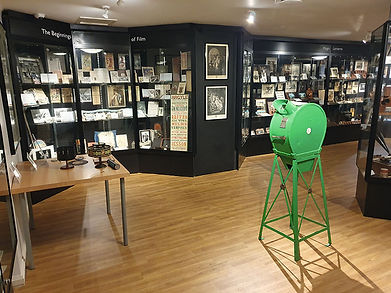

Although not strictly covered by the C20 Soc interests if you are visiting Exeter University it would be a lost opportunity if you didn't visit the wonderful Bill Douglas Cinema Museum in the Old Library
It is home to the foremost collection on cinema and moving image history in Britain. It is both an accredited public museum and an academic research facility and holds a collection of over 93,000 items.